Posts

Autumn Migration at Spurn
Image
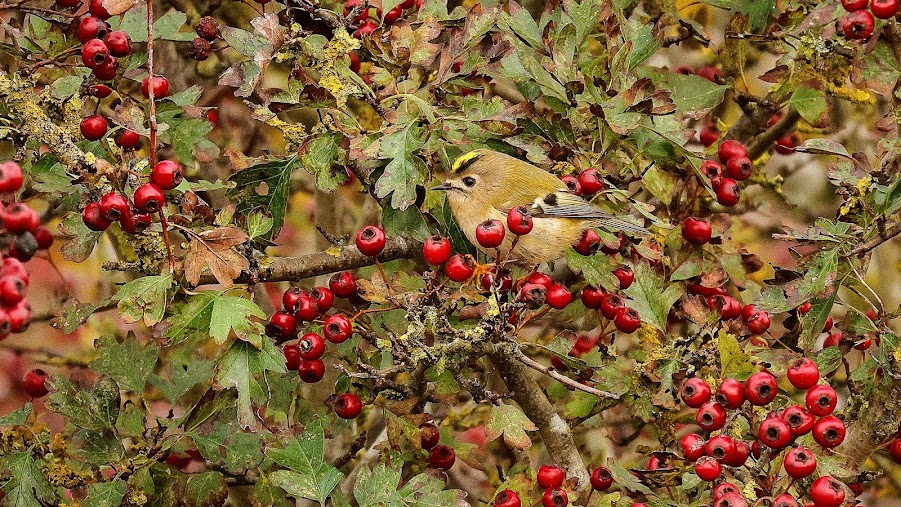
Last month, I was lucky enough to spend a week birding at Spurn Bird Observatory, Yorkshire, on the North East coast. After visiting in September ( click HERE to see my previous Spurn blog post ), I was hooked and keen to go again in peak migration season. Spurn Bird Observatory's recording area stretches from Easington, right down the the far end of the point, and is well known among birders for having a very impressive list of rarities. Spurn is also known for receiving huge numbers of commoner migrants during peak passage period. I was lucky to have timed my visit just right as the weather conditions that week were near-enough perfect; overcast, light rain and easterly wind. I've included this photo of a Goldcrest first as they were one of the highlights of the trip, which were arriving throughout the week.  They were absolutely everywhere, even in the pub car park! Wherever I walked Goldcrests were flitting around and calling all around - very special to see. It is unbel...

Local Autumn Vismig

Image
  Some of you may already know that I've been doing regular visible migration watches (vismig) counts, both from my garden in Herefordshire and from Much Marcle Ridge, around 15 minutes drive away from my home.  In this post, I'm going to go through some of the species which I've seen over the course of the Autumn so far from both locations. Before I start though, I must first mention my  friend Dan Webb, who has helped, taught and encouraged me a huge amount - his enthusiasm for the subject  is infectious!  I can't thank him enough. Vismig  can be observed almost anywhere, though it is best to watch from a natural high point, like Marcle Ridge, which funnels the birds around it in the right weather conditions or [preferably] a costal headland such as  Spurn Point in East Yorkshire.  Spurn is one of the best places to observe vismig in Britain, as the geography of that area is perfectly suited to receive large numbers of migrants. I've b...

Barred Warbler

Image
I'd gone to WWT Slimbridge, Gloucestershire, really just to discuss volunteering but since I was there...I thought I'd do a bit of birding as well! There was nothing showing on the sightings page so I didn't think I'd see much.  I made my way up to the estuary tower, where I met a couple of other birders who were scanning for the American Golden Plover which had been seen the day before.  We didn't manage to see the plover, but a Wheatear , Marsh Harrier , 20+ Ruff and a steady trickle of Redwings moving through kept us interested.  I was thinking about moving on to the next hide when me and Mike King (his blog can be found here:  https://theglosterbirder.co.uk/ ) saw a grey warbler, feeding in the scrub below us. Just before it disappeared back into the Blackthorn, I managed to grab a few quick record shots; with the views we had, we couldn't tell if our bird was Barred or a Garden Warbler.  Only Mike and I saw it initially, so my photos were very useful;...

Migration on the North-east Coast

Image
I recently visited the North-east coast to observe the superb migration which occurs during Autumn. The ideal weather conditions would have been overcast, with northerly or easterly winds but instead it was a week of no wind, bright sunshine with barely a cloud in the sky! As a result, migrants were thin on the ground.  The first location was Flamborough Head, a famed sea-watching  headland and migrant trap. The star find of the few days was this  Pied Flycatcher , freshly arrived in off the sea, seen between Thornwick Bay and Bempton Cliffs on the outer head ,  feeding amongst some vegetation on the cliff-top path.   It will have fledged in Scandinavia and moulted its body feathers soon after (not wing or tail feathers though). The tertials (the 3 most upper wing feathers) have quite a large white edge, aging this bird to being a 1st-winter. Over the course of my stay at Flamborough I found three Wheatears , all  feeding in stubble fields next to the ...